AI-Powered Financial Wellness
'First Bank' | Amsterdam
Goal
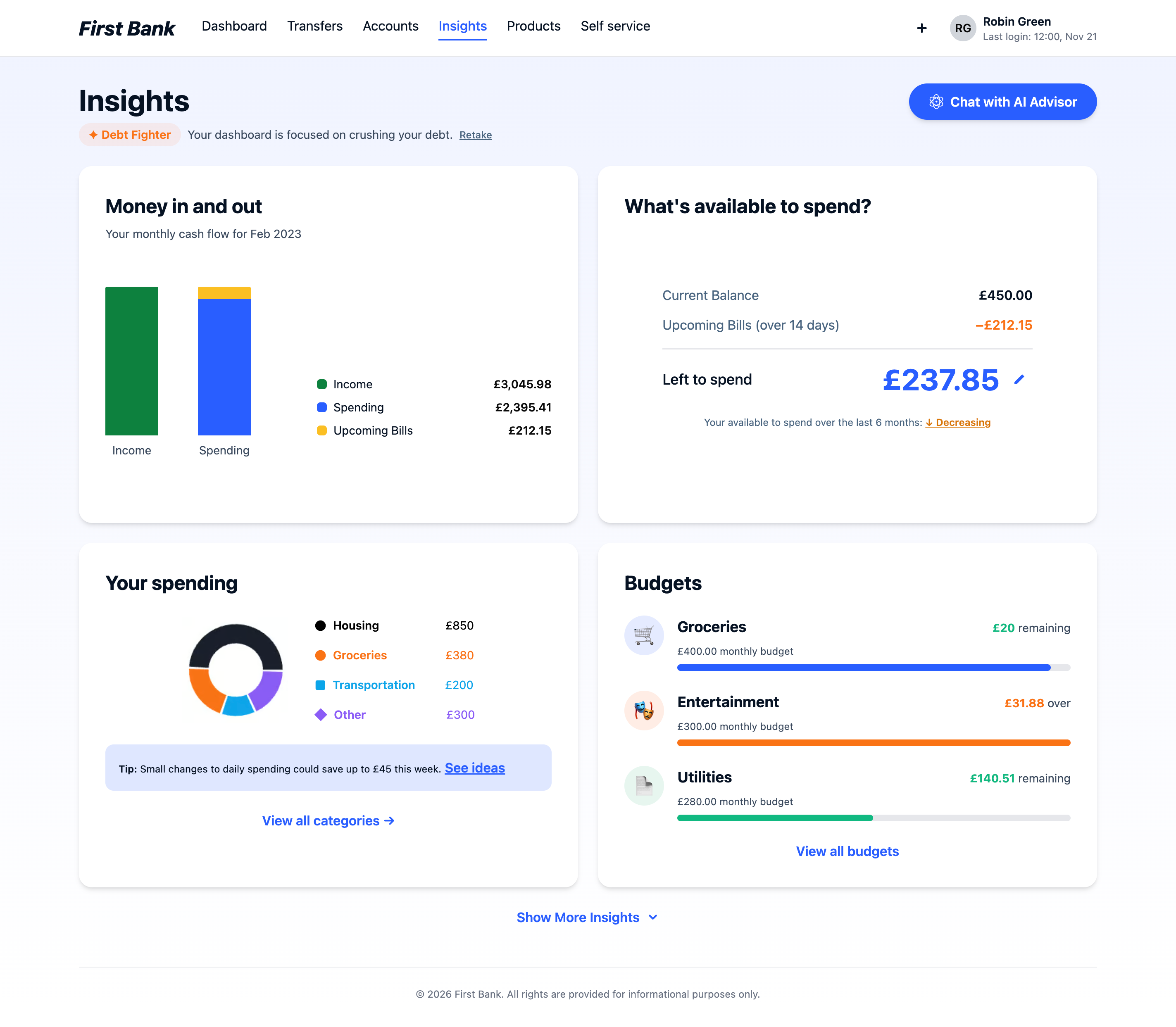
Replace a static, generic Financial Insights screen with an AI-powered experience that translates transaction patterns into personalised, actionable guidance, helping users understand not just where their money went, but what they can confidently do next.
The problem
The existing Financial Insights screen showed users where their money had already gone, but gave them no help deciding what to do next. "Available to spend" was calculated from past transactions, not upcoming bills, so the number was consistently misleading. Users were making discretionary spending decisions without an accurate picture of their committed costs, doing the mental arithmetic themselves, often in spreadsheets. The bank had the data to help. It just wasn't being used.
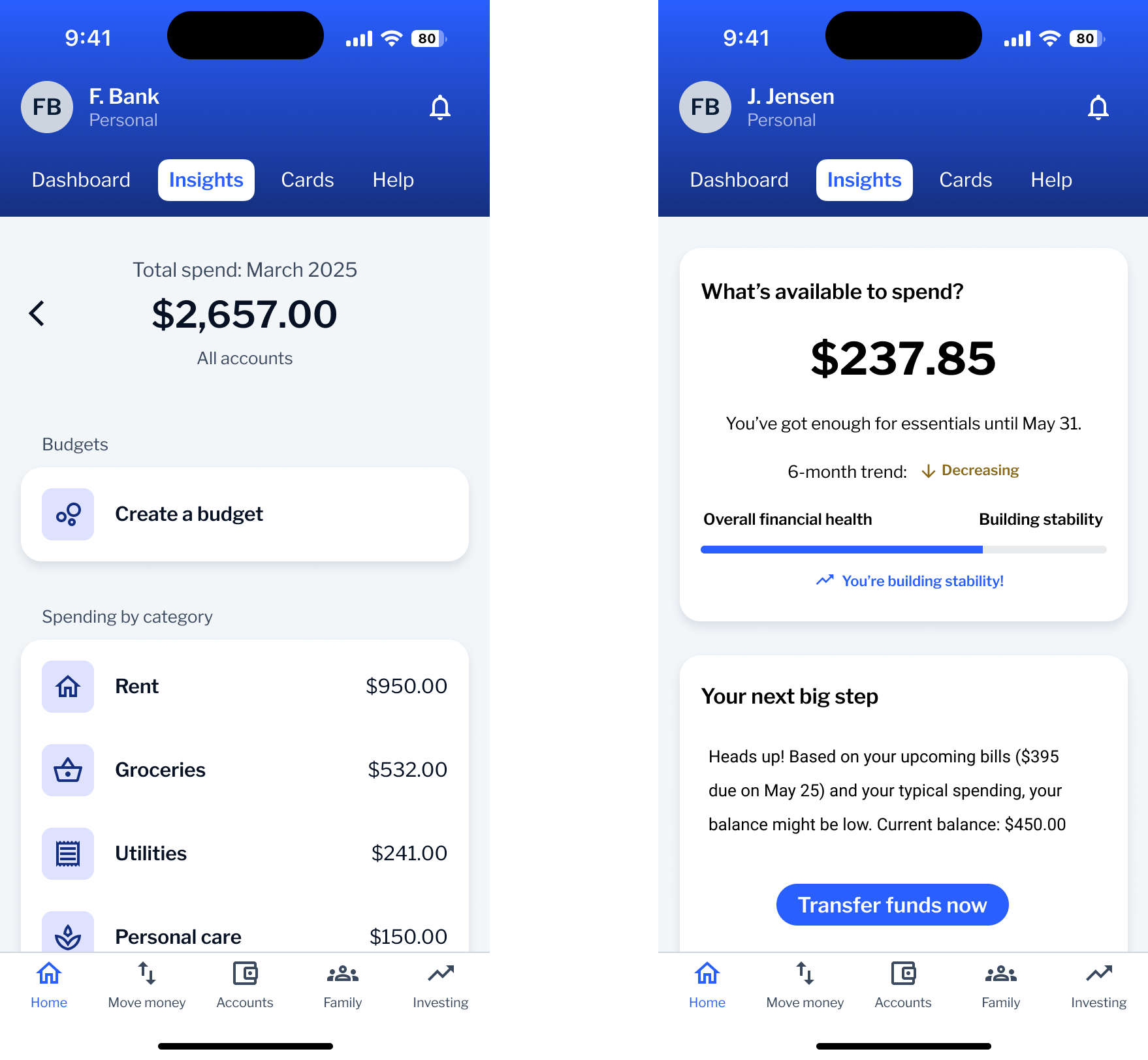
Before and after
Key decisions
01
Users needed to see what they could spend after bills, not after past spending
Variable spending made "available to spend" unreliable. Users couldn't trust it. Dashboards subtracted historical spending from income, ignoring committed costs. In testing, nearly every participant made the same mistake: treating the number as safe to spend.
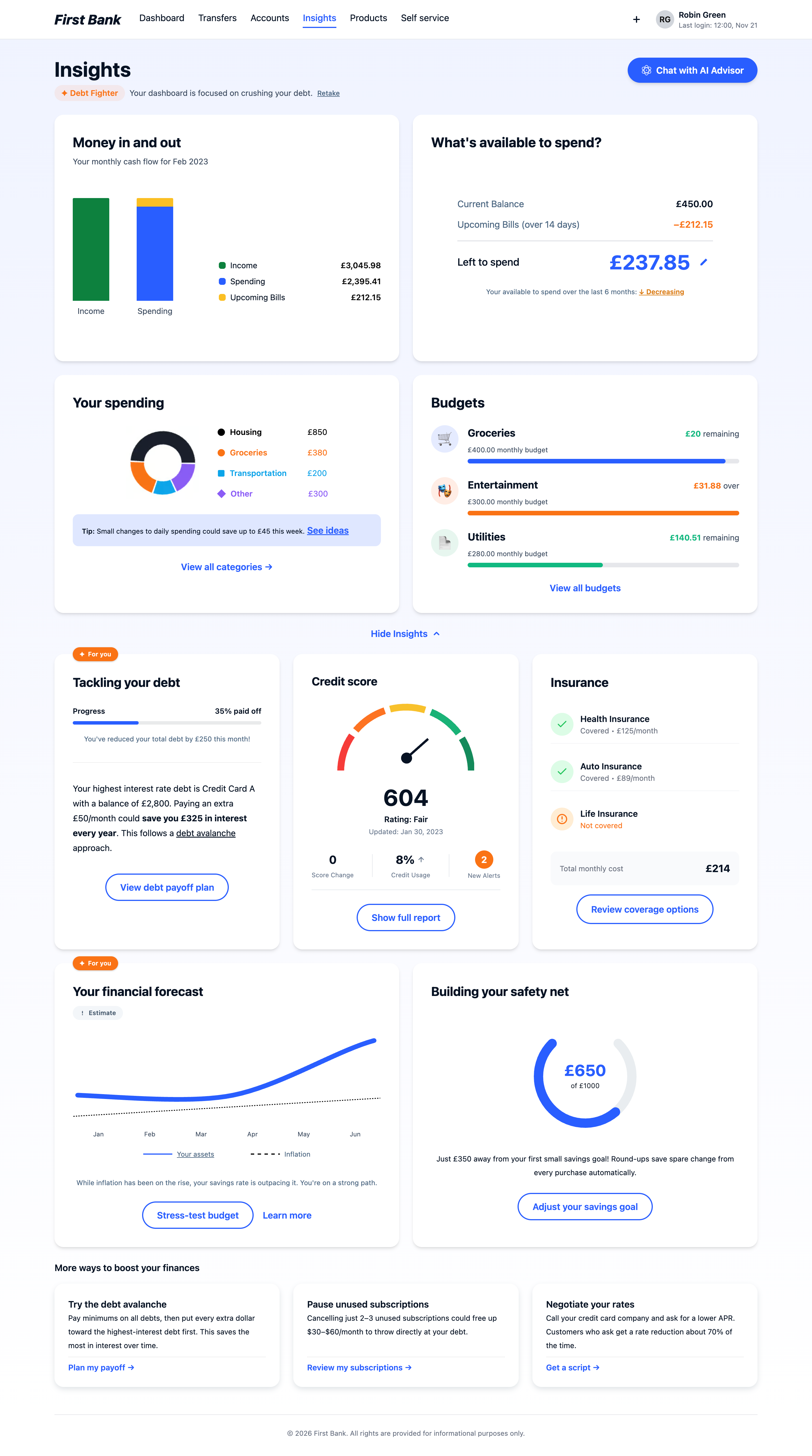
Design decision: The Left to Spend panel shows a transparent, editable calculation: Balance − Upcoming Bills = Available to Spend, that users can adjust when their situation changes. Making the logic visible, not just the output, was the differentiator.
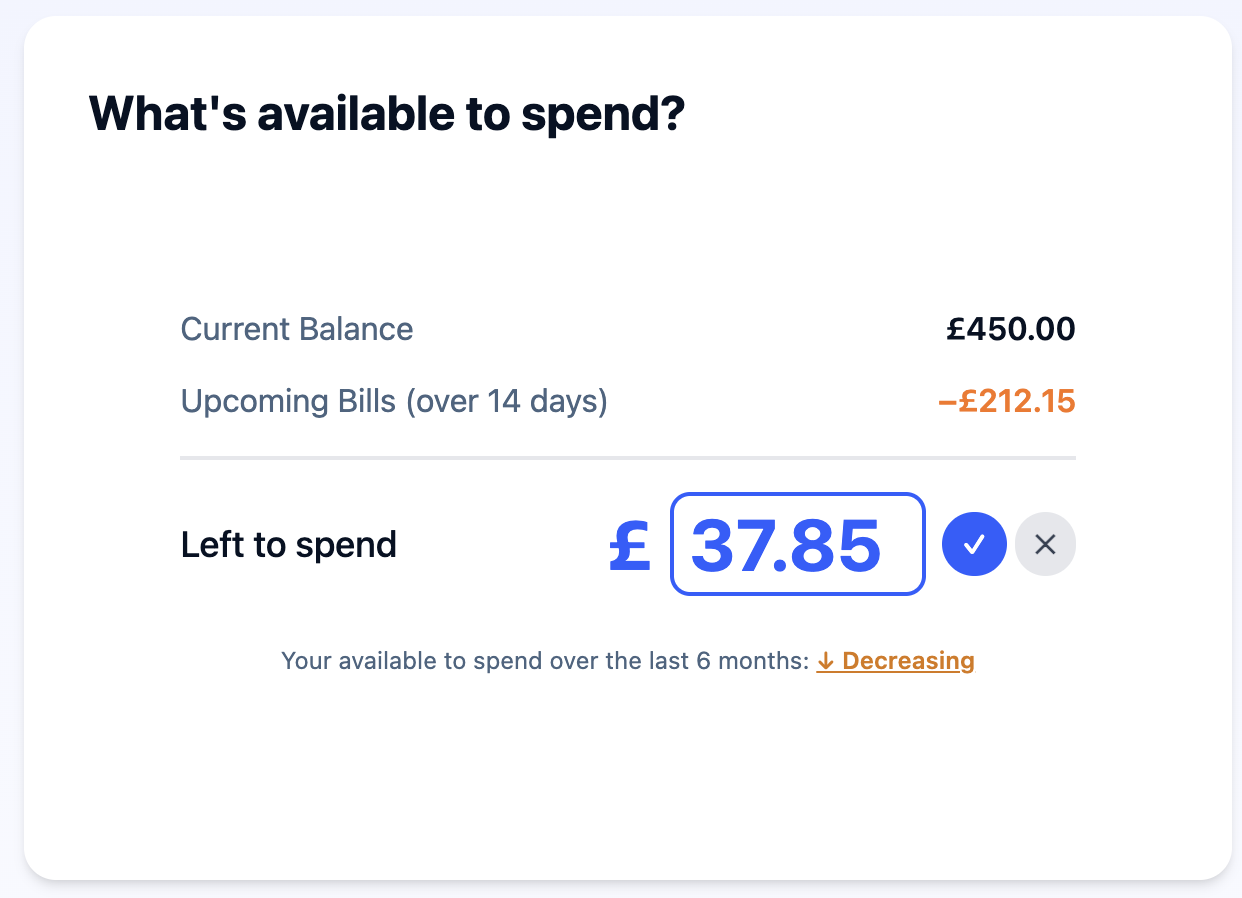 Editing the amount
 Confirmation state
02
More data made people feel less in control
A feature-rich variant was preferred by 60% of users, but 40% disengaged entirely. "It looks like I'm now a data analyst." Simpler layouts felt passive; complex layouts felt alienating. The tension wasn't preference; it was information architecture.
Design decision: Progressive disclosure as a structural principle, not a nice-to-have. A clean default view shows what people check daily. Deeper AI insights surface on demand. The hierarchy makes the dashboard feel calm at a glance and useful on exploration.
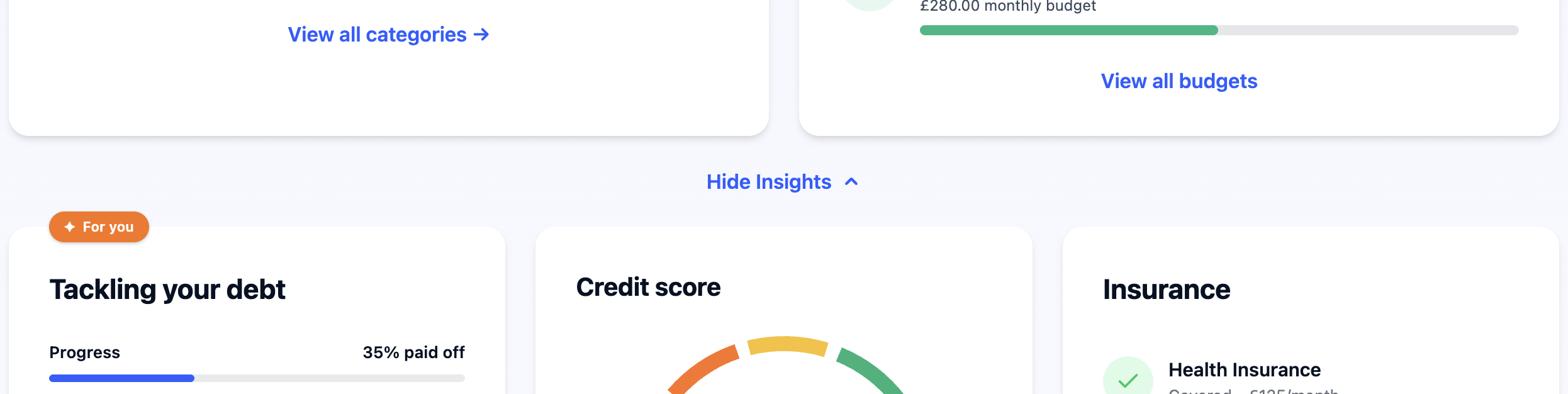 Progressive disclosure on the dashboard
03
AI trust was borrowed from the bank, and had to be maintained through transparency
Users accepted AI features not because they trusted AI, but because they already trusted their bank. That trust was conditional: when calculations were opaque, comfort dropped. When users could see the logic and edit the output, confidence increased.
Design decision: All AI-generated values are transparent and editable. Privacy disclosure appears before AI engagement begins. The AI chat acts as a conversational financial guide: "Pay £55 extra/month to save £325 in interest", not a data readout. Users who felt in control of the AI used it more.
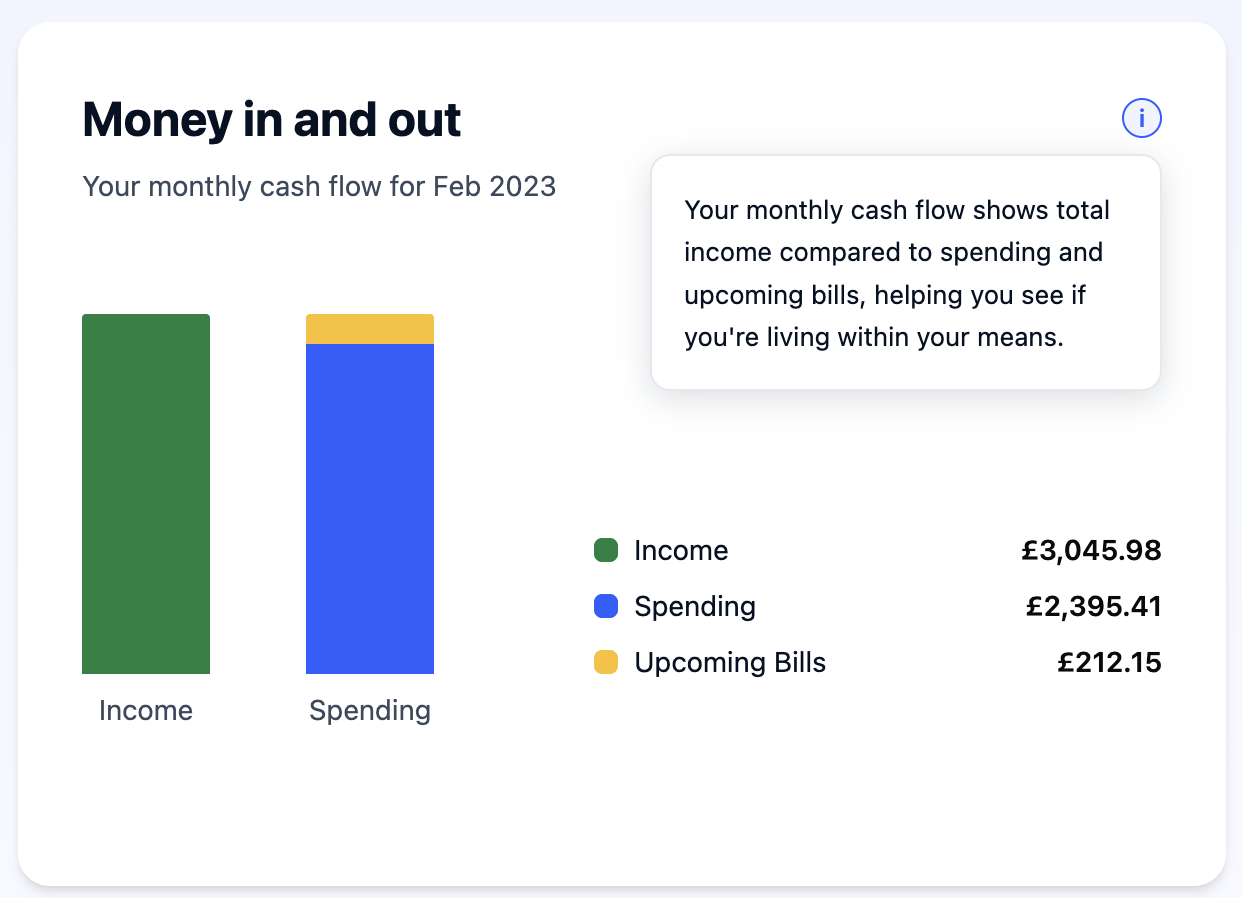 AI helper tips in context
Research & iteration
Three rounds of testing with 26 UK-based users shaped the final design.
- Round 1 surfaced that the "available to spend" calculation was opaque and the editable field needed more affordance, and both were fixed before Round 2.
- Comparing a simpler Control against a richer Variant, 60% preferred the Variant but 40% disengaged: "it looks like I'm now a data analyst." Users asked for the best of both.
- The Hybrid resolved this through progressive disclosure, and 90% chose it in the final round.
This directly shaped the final hierarchy: 'Left to Spend' became the primary card, secondary metrics were simplified, and the calculation logic was made visible by default.
Click any image to zoom
Round 1
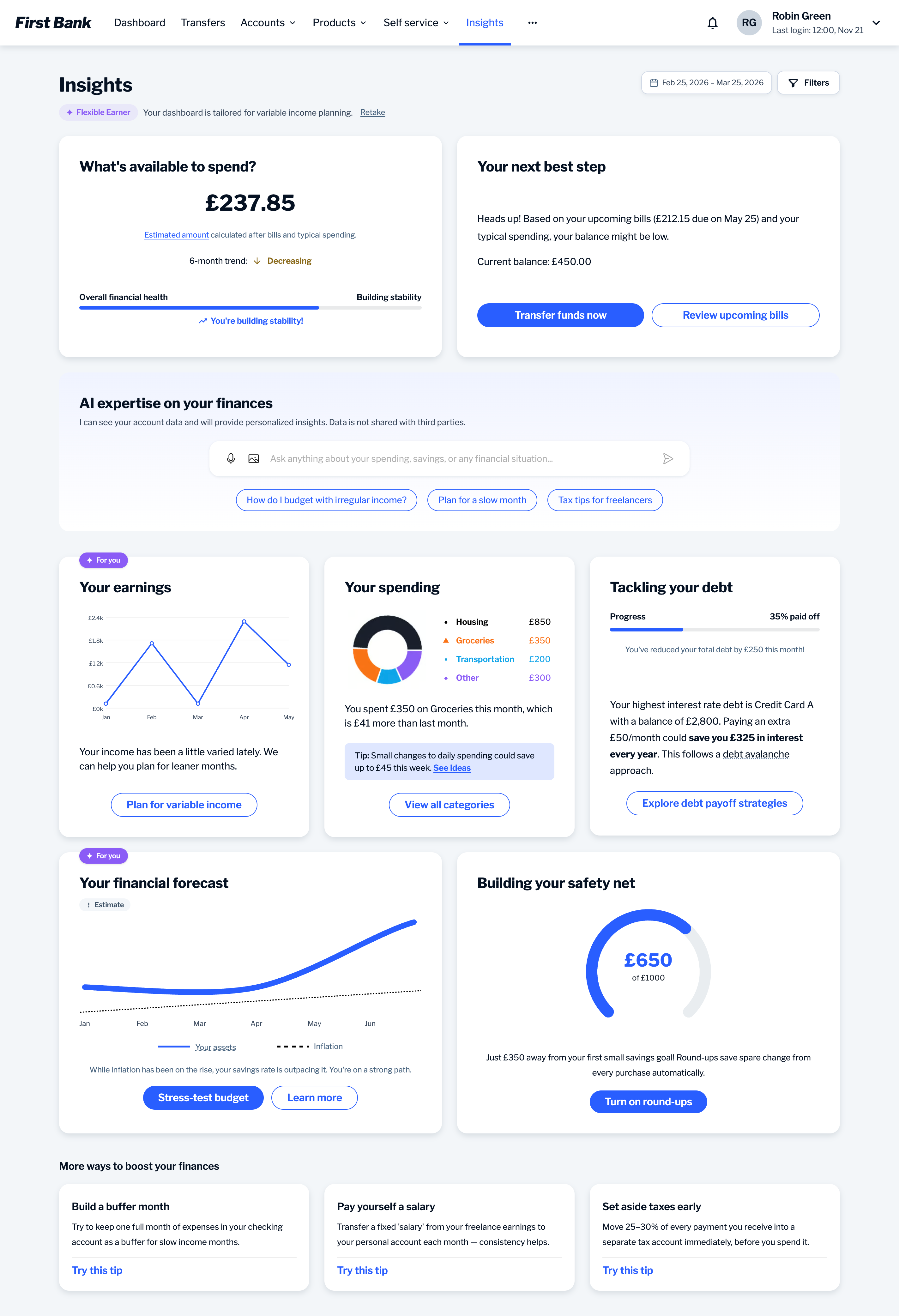 Initial prototype
Round 2
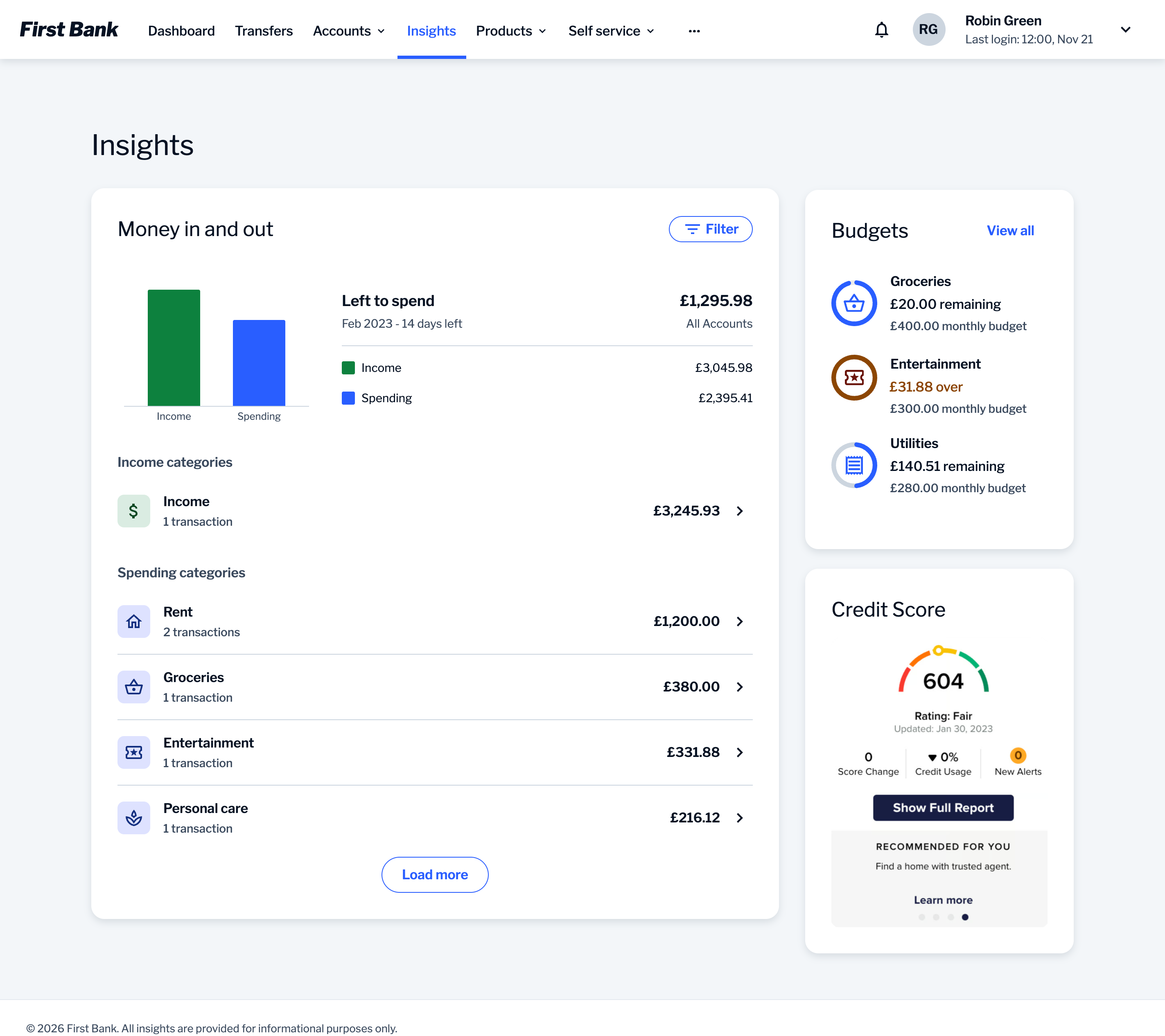 Control
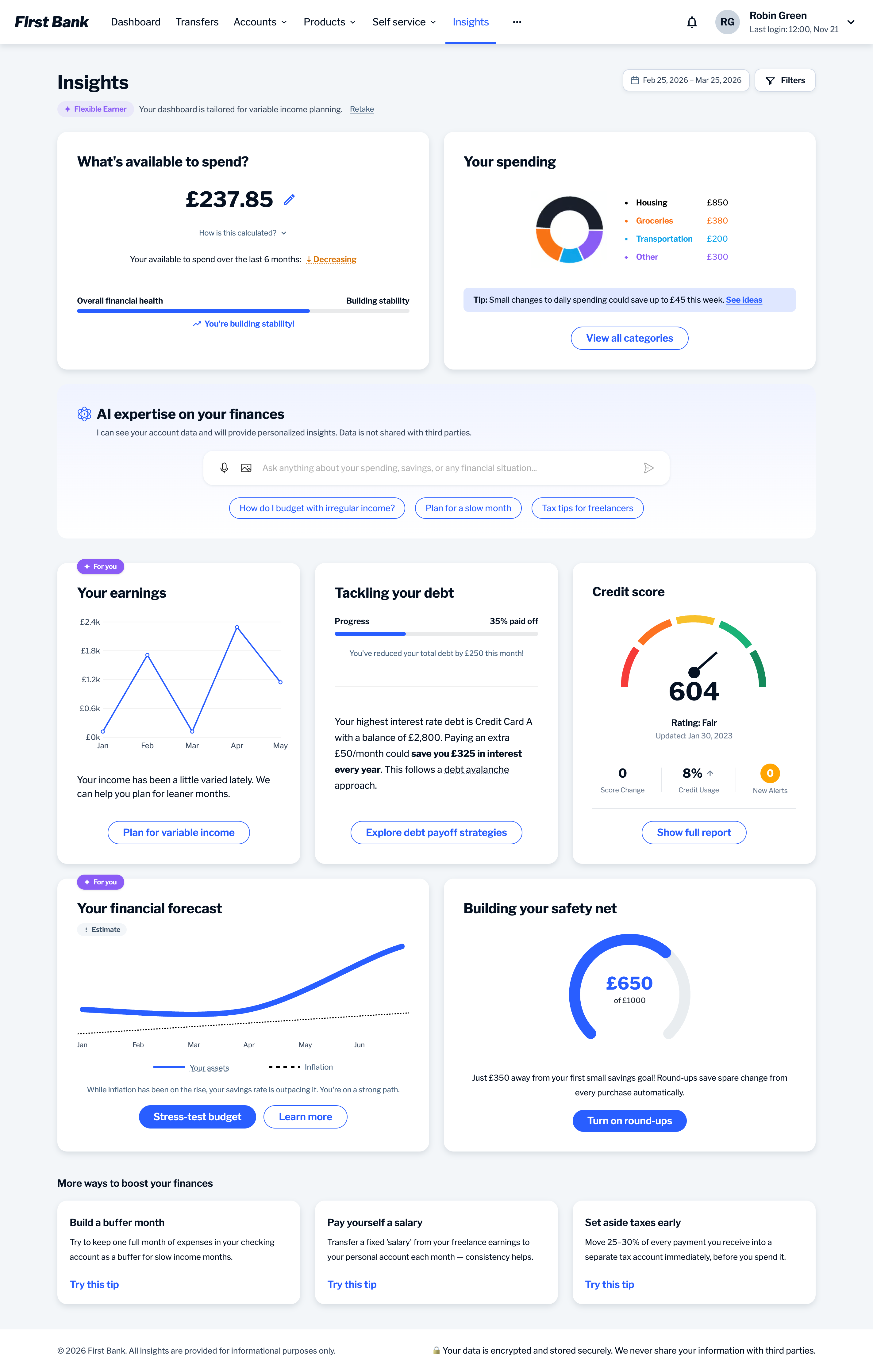 Variant
Round 3
Hybrid
 Show more
Design with insights expanded
After 'Show more'
Impact
- Users consistently used 'Left to Spend' as their primary decision metric across all three testing rounds, replacing the fragmented balance-checking behaviour they'd described at the start of the study.
- 90% of users chose Hybrid over Control. Users consistently prioritised Left to Spend as the first number they checked, before balance or spending history
- Users described it as their "personal financial planner", a shift from passive ledger to active guide, unprompted across all testing rounds
- The concept is now shaping the company's broader Financial Wellness product strategy (details under NDA)